

Disruption & Alternative Futures
Women in the Museum XL • Rijksmuseum • Amsterdam, Netherlands
Work co-developed and facilitated by Hillary Spencer, EdD, in collaboration with futurist Maggie Greyson.
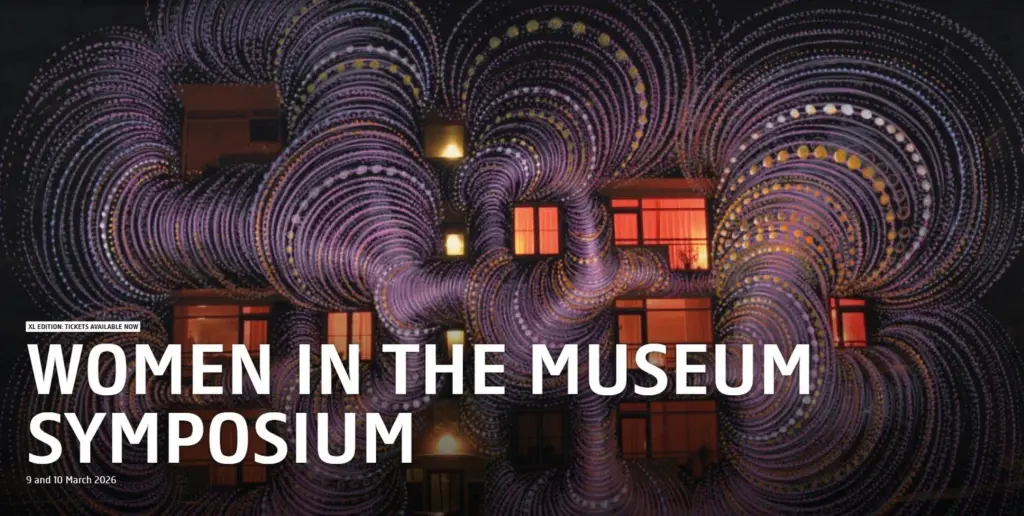
Museums are often very good at imagining futures for their exhibitions, collections, and audiences. Imagining a different future for the institution itself can be much harder.
At Women in the Museum XL, Hillary Spencer and futurist Maggie Greyson designed and facilitated a series of participant engagements that asked museum professionals to examine the assumptions, systems, and inherited narratives shaping their institutions and consider what might become possible if those assumptions were no longer treated as fixed.
The work included a pre-conference warm-up and two interactive workshops designed not to provide answers, but to help participants ask different questions, surface assumptions, and imagine alternatives.
Making the Invisible Visible
Organizations accumulate assumptions over time. Ways of working become traditions. Traditions become expectations. Eventually, choices that were made under particular circumstances can begin to feel inevitable.
The first step toward imagining something different is often simply noticing those assumptions.
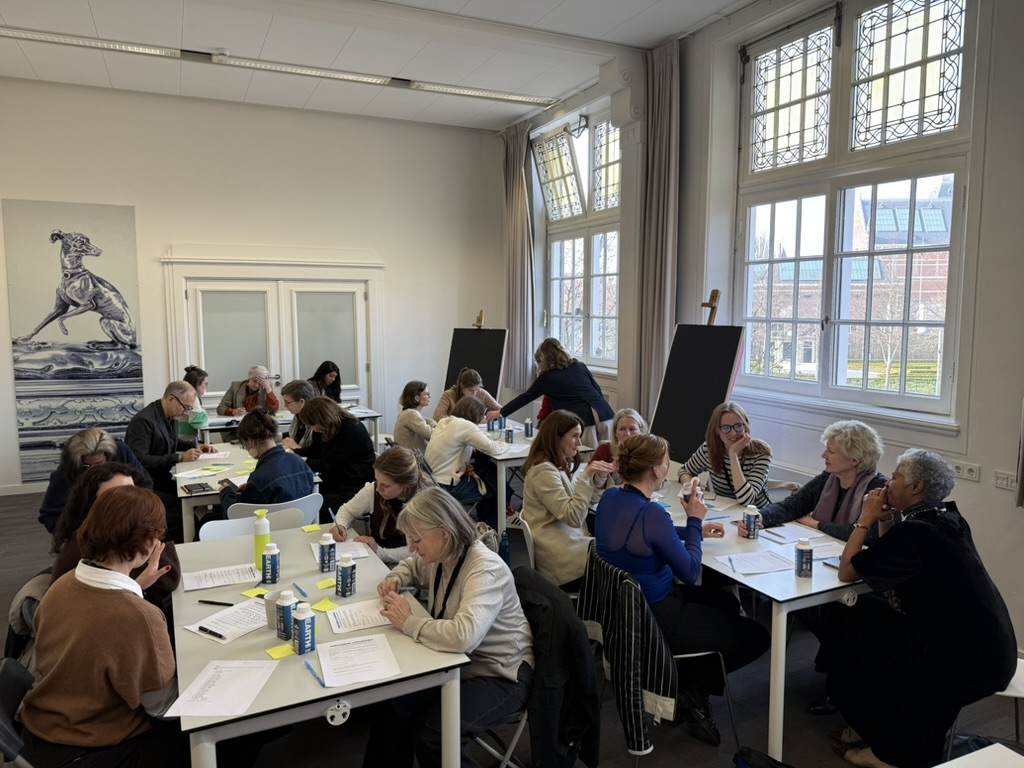
Participants used the Five Whys and Causal Layered Analysis to move beneath immediate organizational challenges and explore the systems, worldviews, narratives, and beliefs that sustain them.
Rather than asking only What is happening?, participants were encouraged to ask Why does this keep happening? What assumptions are underneath it? What story are we telling ourselves about why it has to be this way?
Disruption as a Practice
Disruption was introduced not as chaos or destruction, but as an intentional interruption of patterns that no longer serve us.
Disruption doesn’t mean abandoning museums. It means reimagining what they can become.
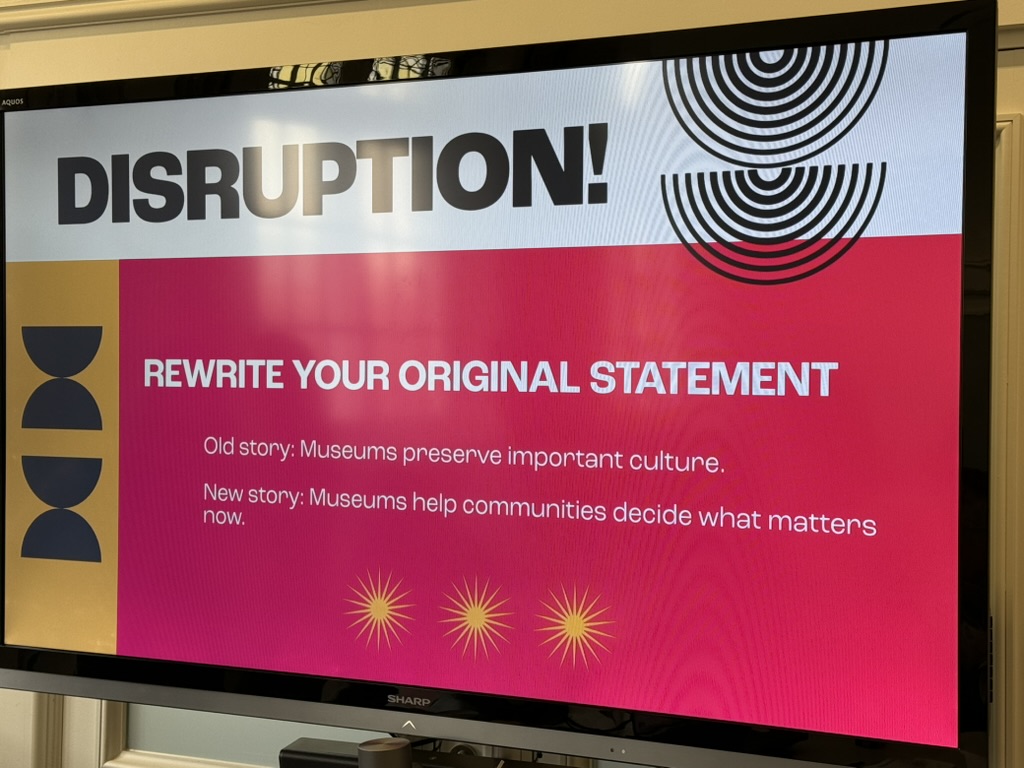
That distinction matters. Challenging an inherited practice does not require rejecting everything that came before it. It requires becoming curious about why something exists, whom it serves, and whether it still helps an institution become what it wants to be.
In this sense, disruption becomes less about tearing something down and more about creating the conditions for change.
Imagining Alternative Futures
Questioning the present is only useful if it opens space for imagining something different.
Using the Three Horizons Framework, participants moved from examining current systems and practices toward imagining more hopeful and inclusive institutional futures. They explored what might need to diminish, what new practices were already emerging, and what could begin now.
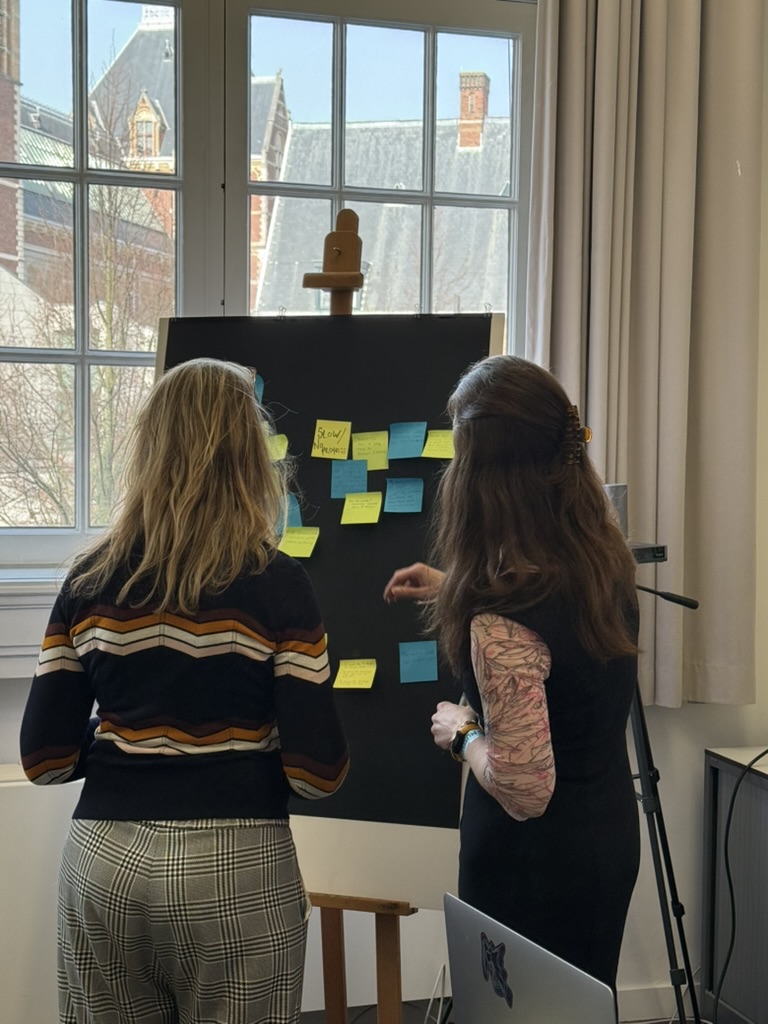
The future wasn’t treated as something participants had to wait for. Participants identified actions and experiments that could begin moving their institutions toward those imagined futures immediately.
The progression was intentional:
- Notice what feels inevitable.
- Question why.
- Imagine what could be different.
- Begin building it.
Essential Question:
What becomes possible when we challenge the assumptions and inherited stories that shape our institutions?
Explore the Work
View the program from Women in the Museum XL
Connection to the Lexicon
Agency (v.) • Disrupt (v.) • Curiosity (n.) • Courage (v.) • Hope (v.) • Possibility (n.) • Imagine (v.)